 e950474a77
24 KiB
I’m sharing this because it highlights important recent developments with Rekor — and how its new v2 rollout and behavior with DSSE change what you need to watch out for when building attestations (for example in your StellaOps architecture).


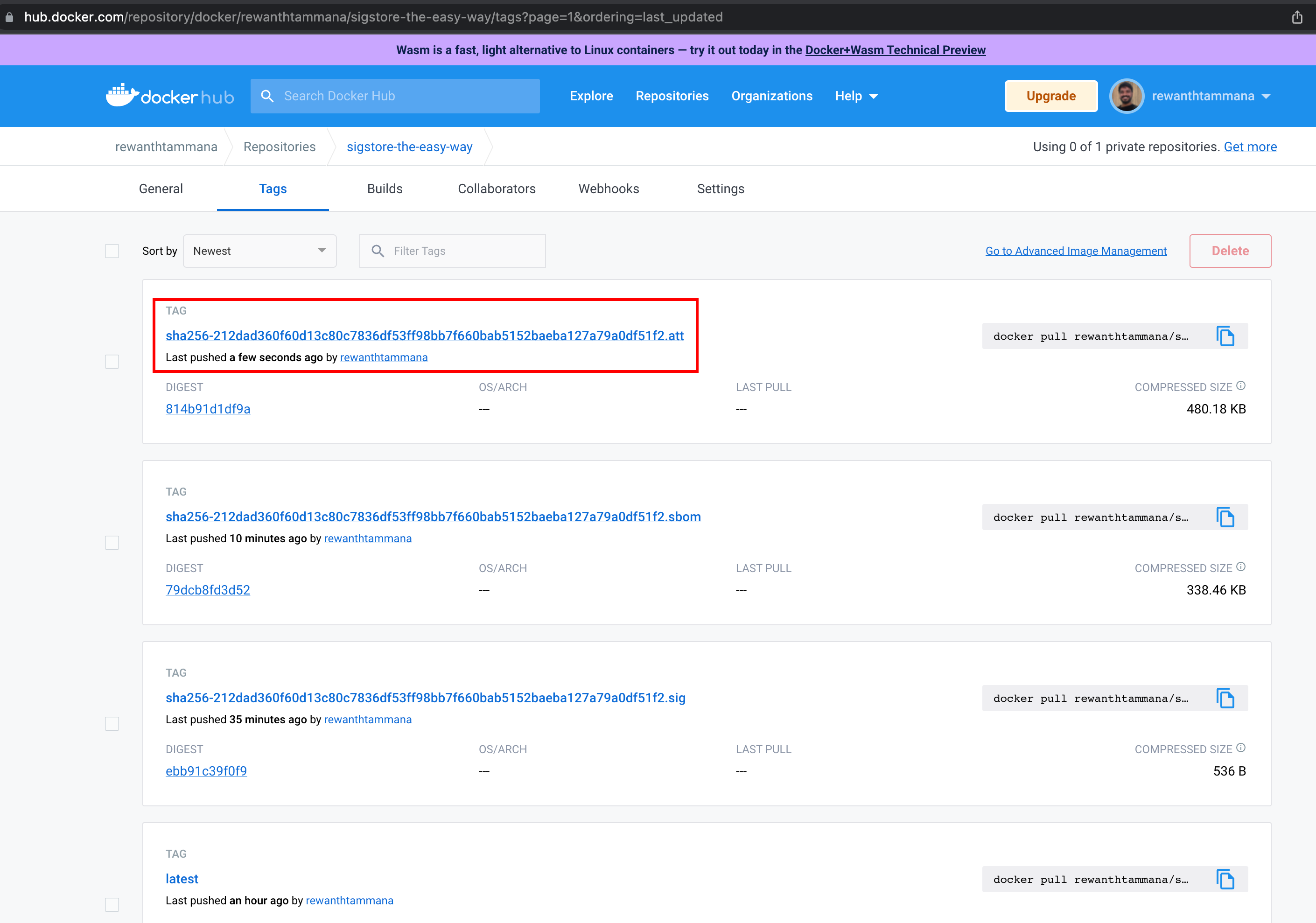
🚨 What changed with Rekor v2
- Rekor v2 is now GA: it moves to a tile‑backed transparency log backend (via the module rekor‑tiles), which simplifies maintenance and lowers infrastructure cost. (blog.sigstore.dev)
- The global publicly‑distributed instance now supports only two entry types:
hashedrekord(for artifacts) anddsse(for attestations). Many previously supported entry types — e.g.intoto,rekord,helm,rfc3161, etc. — have been removed. (blog.sigstore.dev) - The log is now sharded: instead of a single growing Merkle tree, multiple “shards” (trees) are used. This supports better scaling, simpler rotation/maintenance, and easier querying by tree shard + identifier. (Sigstore)
⚠️ Why this matters for attestations, and common pitfalls
- Historically, when using DSSE or in‑toto style attestations submitted to Rekor (or via Cosign), the entire attestation payload had to be uploaded to Rekor. That becomes problematic when payloads are large. There’s a reported case where a 130 MB attestation was rejected due to size. (GitHub)
- The public instance of Rekor historically had a relatively small attestation size limit (on the order of 100 KB) for uploads. (GitHub)
- Because Rekor v2 no longer supports many entry types and simplifies the log types, you no longer have fallback for some of the older attestation/storage formats if they don’t fit DSSE/hashedrekord constraints. (blog.sigstore.dev)
✅ What you must design for — and pragmatic workarounds
Given your StellaOps architecture goals (deterministic builds, reproducible scans, large SBOMs/metadata, private/off‑air‑gap compliance), here’s what you should consider:
- Plan for payload-size constraints: don’t assume arbitrary large attestations will be accepted. Keep attestation payloads small — ideally put large blobs (e.g. full SBOMs, large metadata) outside DSSE and store them elsewhere (artifact storage, internal logs, blob store) with the attestation only embedding a hash or reference.
- Use “private logs” / self‑hosted Rekor if you anticipate large payloads — public instance limits make heavy payload uploads impractical. Running your own instance gives you control over size limits and resource allocation. (GitHub)
- Chunking / sharding: For large metadata blobs, consider splitting (“sharding”) or chunking the data into smaller pieces, each with its own DSSE/hashed‑rekord entry, then reference or re‑assemble externally. This avoids hitting size limits while maintaining inclusion proofs.
- Build idempotent re‑submit logic: Because DSSE/hashed‑rekord entries are the only supported types, and large payloads may fail, your pipelines (e.g. StellaOps) should handle retries, partial submits, and ensure idempotence — so re‑submits don’t create inconsistent or duplicate entries.
- Persist full attestations outside Rekor: Since Rekor v2 dropped many types and doesn’t store full arbitrary blobs necessarily, ensure that the “source of truth” for large metadata remains under your control (e.g. in your internal storage), with Rekor only storing minimal hashed attestations.
🎯 What this means for StellaOps
For your “Proof‑of‑Integrity Graph” + “offline bundle + replayable scans” vision — this means you should treat Rekor (especially public) as a lightweight ledger for proofs, not as a full-blown metadata store. In practice:
- Use Rekor for auditing, signature/inclusion proofs, and “commit‑to‑hash” attestations.
- Store full SBOMs, VEX data, scan metadata, large build/context blobs externally.
- Build your log‑sharding, replay, and artifact‑reference logic to survive Rekor’s constraints.
- For air‑gapped workflows, consider a private Rekor or alternative internal log that mirrors the public transparency‑log guarantees but under your control.
If you like — I can pull up real‑world examples of organizations that already adapted to Rekor v2’s DSSE constraints (with chunking, private logs, hybrid storage) — could help shape StellaOps resilience strategy.
Here’s a concrete, developer‑friendly implementation plan you can hand to the team. I’ll assume the context is “StellaOps + Sigstore/Rekor v2 + DSSE + air‑gapped support”.
0. Shared context & constraints (what devs should keep in mind)
Key facts (summarized):
- Rekor v2 keeps only two entry types:
hashedrekord(artifact signatures) anddsse(attestations). Older types (intoto,rekord, etc.) are gone. (Sigstore Blog) - The public Rekor instance enforces a ~100KB attestation size limit per upload; bigger payloads must use your own Rekor instance instead. (GitHub)
- For DSSE entries, Rekor does not store the full payload; it stores hashes and verification material. Users are expected to persist the attestations alongside artifacts in their own storage. (Go Packages)
- People have already hit problems where ~130MB attestations were rejected by Rekor, showing that “just upload the whole SBOM/provenance” is not sustainable. (GitHub)
- Sigstore’s bundle format is the canonical way to ship DSSE + tlog metadata around as a single JSON object (very useful for offline/air‑gapped replay). (Sigstore)
Guiding principles for the implementation:
- Rekor is a ledger, not a blob store. We log proofs (hashes, inclusion proofs), not big documents.
- Attestation payloads live in our storage (object store / DB).
- All Rekor interaction goes through one abstraction so we can easily switch public/private/none.
- Everything is idempotent and replayable (important for retries and air‑gapped exports).
1. High‑level architecture
1.1 Components
-
Attestation Builder library (in CI/build tools)
-
Used by build pipelines / scanners / SBOM generators.
-
Responsibilities:
- Collect artifact metadata (digest, build info, SBOM, scan results).
- Call Attestation API (below) with semantic info and raw payload(s).
-
-
Attestation Service (core backend microservice)
-
Single entry‑point for creating and managing attestations.
-
Responsibilities:
-
Normalize incoming metadata.
-
Store large payload(s) in object store.
-
Construct small DSSE envelope (payload = manifest / summary, not giant blob).
-
Persist attestation records & payload manifests in DB.
-
Enqueue log‑submission jobs for:
- Public Rekor v2
- Private Rekor v2 (optional)
- Internal event log (DB/Kafka)
-
Produce Sigstore bundles for offline use.
-
-
-
Log Writer / Rekor Client Worker(s)
-
Background workers consuming submission jobs.
-
Responsibilities:
- Submit
dsse(and optionallyhashedrekord) entries to configured Rekor instances. - Handle retries with backoff.
- Guarantee idempotency (no duplicate entries, no inconsistent state).
- Update DB with Rekor log index/uuid and status.
- Submit
-
-
Offline Bundle Exporter (CLI or API)
-
Runs in air‑gapped cluster.
-
Responsibilities:
-
Periodically export “new” attestations + bundles since last export.
-
Materialize data as tar/zip with:
- Sigstore bundles (JSON)
- Chunk manifests
- Large payload chunks (optional, depending on policy).
-
-
-
Offline Replay Service (connected environment)
-
Runs where internet access and public Rekor are available.
-
Responsibilities:
-
Read offline bundles from incoming location.
-
Replay to:
- Public Rekor
- Cloud storage
- Internal observability
-
Write updated status back (e.g., via a status file or callback).
-
-
-
Config & Policy Layer
-
Central (e.g. YAML, env, config DB).
-
Controls:
- Which logs to use:
public_rekor,private_rekor,internal_only. - Size thresholds (DSSE payload limit, chunk size).
- Retry/backoff policy.
- Air‑gapped mode toggles.
- Which logs to use:
-
2. Data model (DB + storage)
Use whatever DB you have (Postgres is fine). Here’s a suggested schema, adapt as needed.
2.1 Core tables
attestations
| Column | Type | Description |
|---|---|---|
id |
UUID (PK) | Internal identifier |
subject_digest |
text | e.g., sha256:<hex> of build artifact |
subject_uri |
text | Optional URI (image ref, file path, etc.) |
predicate_type |
text | e.g. https://slsa.dev/provenance/v1 |
payload_schema_version |
text | Version of our manifest schema |
dsse_envelope_digest |
text | sha256 of DSSE envelope |
bundle_location |
text | URL/path to Sigstore bundle (if cached) |
created_at |
timestamptz | Creation time |
created_by |
text | Origin (pipeline id, service name) |
metadata |
jsonb | Extra labels / tags |
payload_manifests
| Column | Type | Description |
|---|---|---|
attestation_id (FK) |
UUID | Link to attestations.id |
total_size_bytes |
bigint | Size of the full logical payload |
chunk_count |
int | Number of chunks |
root_digest |
text | Digest of full payload or Merkle root over chunks |
manifest_json |
jsonb | The JSON we sign in the DSSE payload |
created_at |
timestamptz |
payload_chunks
| Column | Type | Description |
|---|---|---|
attestation_id (FK) |
UUID | |
chunk_index |
int | 0‑based index |
chunk_digest |
text | sha256 of this chunk |
size_bytes |
bigint | Size of chunk |
storage_uri |
text | s3://… or equivalent |
| PRIMARY KEY | (attestation_id, chunk_index) | Ensures uniqueness |
log_submissions
| Column | Type | Description |
|---|---|---|
id |
UUID (PK) | |
attestation_id (FK) |
UUID | |
target |
text | public_rekor, private_rekor, internal |
submission_key |
text | Idempotency key (see below) |
state |
text | pending, in_progress, succeeded, failed_permanent |
attempt_count |
int | For retries |
last_error |
text | Last error message |
rekor_log_index |
bigint | If applicable |
rekor_log_id |
text | Log ID (tree ID / key ID) |
created_at |
timestamptz | |
updated_at |
timestamptz |
Add a unique index on (target, submission_key) to guarantee idempotency.
3. DSSE payload design (how to avoid size limits)
3.1 Manifest‑based DSSE instead of giant payloads
Instead of DSSE‑signing the entire SBOM/provenance blob (which hits Rekor’s 100KB limit), we sign a manifest describing where the payload lives and how to verify it.
Example manifest JSON (payload of DSSE, small):
{
  "version": "stellaops.manifest.v1",
  "subject": {
    "uri": "registry.example.com/app@sha256:abcd...",
    "digest": "sha256:abcd..."
  },
  "payload": {
    "type": "sbom.spdx+json",
    "rootDigest": "sha256:deadbeef...",
    "totalSize": 73400320,
    "chunkCount": 12
  },
  "chunks": [
    {
      "index": 0,
      "digest": "sha256:1111...",
      "size": 6291456
    },
    {
      "index": 1,
      "digest": "sha256:2222...",
      "size": 6291456
    }
    // ...
  ],
  "storagePolicy": {
    "backend": "s3",
    "bucket": "stellaops-attestations",
    "pathPrefix": "sboms/app/abcd..."
  }
}
- This JSON is small enough to fit under 100KB even with lots of chunks, so the DSSE envelope stays small.
- Full SBOM/scan results live in your object store; Rekor logs the DSSE envelope hash.
3.2 Chunking logic (Attestation Service)
Config values (can be env vars):
CHUNK_SIZE_BYTES= e.g. 5–10 MiBMAX_DSSE_PAYLOAD_BYTES= e.g. 70 KiB (keeping margin under Rekor 100KB limit)MAX_CHUNK_COUNT= safety guard
Algorithm:
-
Receive raw payload bytes (SBOM / provenance / scan results).
-
Compute full
root_digest = sha256(payload_bytes)(or Merkle root if you want more advanced verification). -
If
len(payload_bytes) <= SMALL_PAYLOAD_THRESHOLD(e.g. 64 KB):- Skip chunking.
- Store payload as single object.
- Manifest can optionally omit
chunksand just record one object.
-
If larger:
-
Split into fixed‑size chunks (except last).
-
For each chunk:
- Compute
chunk_digest. - Upload chunk to object store path derived from
root_digest+chunk_index. - Insert
payload_chunksrows.
- Compute
-
-
Build manifest JSON with:
versionsubjectpayloadblockchunks[](no URIs if you don’t want to leak details; the URIs can be derived by clients).
-
Check serialized manifest size ≤
MAX_DSSE_PAYLOAD_BYTES. If not:- Option A: increase chunk size so you have fewer chunks.
- Option B: move chunk list to a secondary “chunk index” document and sign only its root digest.
-
DSSE‑sign manifest JSON.
-
Persist DSSE envelope digest + manifest in DB.
4. Rekor integration & idempotency
4.1 Rekor client abstraction
Implement an interface like:
interface TransparencyLogClient {
  submitDsseEnvelope(params: {
    dsseEnvelope: Buffer;      // JSON bytes
    subjectDigest: string;
    predicateType: string;
  }): Promise<{
    logIndex: number;
    logId: string;
    entryUuid: string;
  }>;
}
Provide implementations:
PublicRekorClient(points athttps://rekor.sigstore.devor v2 equivalent).PrivateRekorClient(your own Rekor v2 cluster).NullClient(for internal‑only mode).
Use official API semantics from Rekor OpenAPI / SDKs where possible. (Sigstore)
4.2 Submission jobs & idempotency
Submission key design:
submission_key = sha256(
  "dsse" + "|" +
  rekor_base_url + "|" +
  dsse_envelope_digest
)
Workflow in the worker:
-
Worker fetches
log_submissionswithstate = 'pending'or due for retry. -
Set
state = 'in_progress'(optimistic update). -
Call
client.submitDsseEnvelope. -
If success:
- Update
state = 'succeeded', setrekor_log_index,rekor_log_id.
- Update
-
If Rekor indicates “already exists” (or returns same logIndex for same envelope):
- Treat as success, update
state = 'succeeded'.
- Treat as success, update
-
On network/5xx errors:
- Increment
attempt_count. - If
attempt_count < MAX_RETRIES: schedule retry with backoff. - Else:
state = 'failed_permanent', keeplast_error.
- Increment
DB constraint: UNIQUE(target, submission_key) ensures we don’t create conflicting jobs.
5. Attestation Service API design
5.1 Create attestation (build/scan pipeline → Attestation Service)
POST /v1/attestations
Request body (example):
{
  "subject": {
    "uri": "registry.example.com/app@sha256:abcd...",
    "digest": "sha256:abcd..."
  },
  "payloadType": "sbom.spdx+json",
  "payload": {
    "encoding": "base64",
    "data": "<base64-encoded-sbom-or-scan>"
  },
  "predicateType": "https://slsa.dev/provenance/v1",
  "logTargets": ["internal", "private_rekor", "public_rekor"],
  "airgappedMode": false,
  "labels": {
    "team": "payments",
    "env": "prod"
  }
}
Server behavior:
-
Validate subject & payload.
-
Chunk payload as per rules (section 3).
-
Store payload chunks.
-
Build manifest JSON & DSSE envelope.
-
Insert
attestations,payload_manifests,payload_chunks. -
For each
logTargets:- Insert
log_submissionsrow withstate = 'pending'.
- Insert
-
Optionally construct Sigstore bundle representing:
- DSSE envelope
- Transparency log entry (when available) — for async, you can fill this later.
-
Return
202 Acceptedwith resource URL:
{
  "attestationId": "1f4b3d...",
  "status": "pending_logs",
  "subjectDigest": "sha256:abcd...",
  "logTargets": ["internal", "private_rekor", "public_rekor"],
  "links": {
    "self": "/v1/attestations/1f4b3d...",
    "bundle": "/v1/attestations/1f4b3d.../bundle"
  }
}
5.2 Get attestation status
GET /v1/attestations/{id}
Returns:
{
  "attestationId": "1f4b3d...",
  "subjectDigest": "sha256:abcd...",
  "predicateType": "https://slsa.dev/provenance/v1",
  "logs": {
    "internal": {
      "state": "succeeded"
    },
    "private_rekor": {
      "state": "succeeded",
      "logIndex": 1234,
      "logId": "..."
    },
    "public_rekor": {
      "state": "pending",
      "lastError": null
    }
  },
  "createdAt": "2025-11-27T12:34:56Z"
}
5.3 Get bundle
GET /v1/attestations/{id}/bundle
-
Returns a Sigstore bundle JSON that:
-
Contains either:
- Only the DSSE + identity + certificate chain (if logs not yet written).
- Or DSSE + log entries (
hashedrekord/dsseentries) for whichever logs are ready. (Sigstore)
-
-
This is what air‑gapped exports and verifiers consume.
6. Air‑gapped workflows
6.1 In the air‑gapped environment
-
Attestation Service runs in “air‑gapped mode”:
logTargetstypically =["internal", "private_rekor"].- No direct public Rekor.
-
Offline Exporter CLI:
stellaops-offline-export \ --since-id <last_exported_attestation_id> \ --output offline-bundle-<timestamp>.tar.gz -
Exporter logic:
-
Query DB for new
attestations>since-id. -
For each attestation:
- Fetch DSSE envelope.
- Fetch current log statuses (private rekor, internal).
- Build or reuse Sigstore bundle JSON.
- Optionally include payload chunks and/or original payload.
-
Write them into a tarball with structure like:
/attestations/<id>/bundle.json
/attestations/<id>/chunks/chunk-0000.bin
...
/meta/export-metadata.json
-
6.2 In the connected environment
-
Replay Service:
stellaops-offline-replay \ --input offline-bundle-<timestamp>.tar.gz \ --public-rekor-url https://rekor.sigstore.dev -
Replay logic:
-
Read each
/attestations/<id>/bundle.json. -
If
public_rekorentry not present:- Extract DSSE envelope from bundle.
- Call Attestation Service “import & log” endpoint or directly call PublicRekorClient.
- Build new updated bundle (with public tlog entry).
-
Emit an updated
result.jsonfor each attestation (so you can sync status back to original environment if needed).
-
7. Observability & ops
7.1 Metrics
Have devs expose at least:
rekor_submit_requests_total{target, outcome}rekor_submit_latency_seconds{target}(histogram)log_submissions_in_queue{target}attestations_total{predicateType}attestation_payload_bytes{bucket}(distribution of payload sizes)
7.2 Logging
-
Log at info:
- Attestation created (subject digest, predicateType, manifest version).
- Log submission succeeded (target, logIndex, logId).
-
Log at warn/error:
- Any permanent failure.
- Any time DSSE payload nearly exceeds size threshold (to catch misconfig).
7.3 Feature flags
FEATURE_REKOR_PUBLIC_ENABLEDFEATURE_REKOR_PRIVATE_ENABLEDFEATURE_OFFLINE_EXPORT_ENABLEDFEATURE_CHUNKING_ENABLED(to allow rolling rollout)
8. Concrete work breakdown for developers
You can basically drop this as a backlog outline:
-
Domain model & storage
- Implement DB migrations for
attestations,payload_manifests,payload_chunks,log_submissions. - Implement object storage abstraction and content‑addressable layout for chunks.
- Implement DB migrations for
-
Attestation Service skeleton
- Implement
POST /v1/attestationswith basic validation. - Implement manifest building and DSSE envelope creation (no Rekor yet).
- Persist records in DB.
- Implement
-
Chunking & manifest logic
- Implement chunker with thresholds & tests (small vs large).
- Implement manifest JSON builder.
- Ensure DSSE payload size is under configurable limit.
-
Rekor client & log submissions
- Implement
TransparencyLogClientinterface + Public/Private implementations. - Implement
log_submissionsworker (queue + backoff + idempotency). - Wire worker into service config and deployment.
- Implement
-
Sigstore bundle support
- Implement bundle builder given DSSE envelope + log metadata.
- Add
GET /v1/attestations/{id}/bundle.
-
Offline export & replay
- Implement Exporter CLI (queries DB, packages bundles and chunks).
- Implement Replay CLI/service (reads tarball, logs to public Rekor).
- Document operator workflow for moving tarballs between environments.
-
Observability & docs
- Add metrics, logs, and dashboards.
- Write verification docs: “How to fetch manifest, verify DSSE, reconstruct payload, and check Rekor.”
If you’d like, next step I can do is: take this and turn it into a more strict format your devs might already use (e.g. Jira epics + stories, or a design doc template with headers like “Motivation, Alternatives, Risks, Rollout Plan”).